Before you start
For a close head-and-shoulders portrait, the lower crop may fall around the upper chest; use the destination layout as your reference. Because the crop eliminates sleeves, waists, and hem lines, the neckline becomes the primary anchor for the composition. Choosing between an open collar, a crewneck, or a turtleneck is not a matter of following rigid dressing rules; it is a practical decision about how fabric lines direct attention toward your eyes and face.
When preparing a portrait, evaluate how each neckline behaves inside a tight boundary. An open collar introduces angled, geometric lines; a crewneck creates a smooth, neutral curve; and a turtleneck provides an uninterrupted block of fabric that extends upward toward the jaw. Comparing these options allows you to choose an outfit that stays neat, fits comfortably, and avoids distracting folds.
How Crop Framing Changes Garment Proportions
In full-length or three-quarter photography, an outfit balances visual weight across the shoulders, torso, and legs. In a tight headshot crop, the relationship between fabric and skin shifts dramatically:
- Proximity to the Jawline: Necklines that sit higher up the throat draw the visual foundation of the portrait closer to the chin.
- Vulnerability to Posture Shifts: When you sit or lean slightly toward the camera, fabric bunches upward. A neckline that sits flat while standing may buckle or fold when seated.
- Perceived Frame Balance: Deep or wide cuts risk dropping below the bottom edge of a 1:1 square crop (common on LinkedIn and profile directories), which can create the optical illusion of bare shoulders.
In practical headshot prep guidance, photographer Julia Nance notes that neckline choices depend primarily on individual personal style and organizational context rather than rigid rules about universal flattery. Selecting the right cut requires looking at how fabric tension and garment seams actually appear on camera.
The Three Core Necklines in a Tight Crop
+-------------------------------------------------------------------+
|                         HEADSHOT CROPPING                         |
+---------------------------------+---------------------------------+
| COLLARED SHIRTS                 | CREWNECKS                       |
| • Diagonal framing lines        | • Smooth, neutral horizontal arc|
| • Check: collar gap & symmetry  | • Check: collar band tension    |
+---------------------------------+---------------------------------+
| TURTLENECKS & MOCK NECKS        | CROP BOUNDARY RISKS             |
| • Continuous solid base         | • Deep cuts disappearing        |
| • Check: fabric sag & roll fold | • Sitting posture bunching      |
+---------------------------------+---------------------------------+
1. Structured Collars (Button-Downs and Blouses)
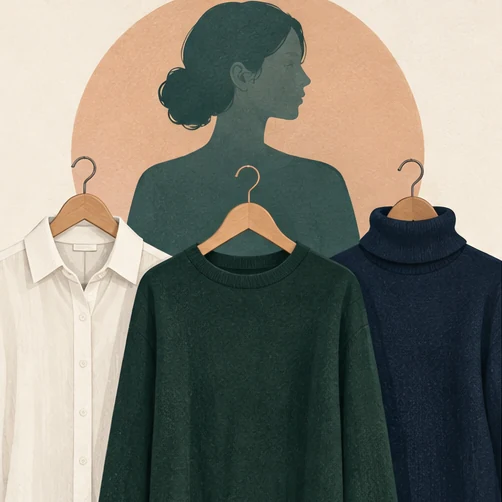
Collared shirts establish strong diagonal lines that angle downward from the neck toward the sternum, naturally guiding the viewer's gaze inward.
- Strengths: Collars provide clear structural definition. When worn under a blazer or cardigan, they create layered contrast that defines the shoulders even in a tight frame.
- Folds and Gaps: If unbuttoned too low, collar leaves can splay outward or tuck unevenly beneath jacket lapels. Soft fabrics without collar stays often collapse on one side when your head turns, creating unintended asymmetry.
- Fit Consideration: Ensure the collar band sits comfortably against the back of the neck without gapping backward when you lean forward.
2. Crewnecks (Sweaters and Structured Tees)
A crewneck offers a clean, uninterrupted curved line resting just above the collarbone.
- Strengths: The minimal border can leave more visual emphasis on your face. Because the line is horizontal and predictable, it adapts well to circular avatar crops.
- Folds and Gaps: Check lightweight cotton tees for stretched, rolled, or wrinkled collar bands that may be more noticeable in the photograph.
- Fit Consideration: Medium-weight knits, fine-gauge sweaters, or tees with reinforced ribbed bands may hold their shape, but check the fit in your actual pose.
3. Turtlenecks and Mock Necks
Turtlenecks cover the throat and sit directly beneath the jawline, creating a solid field of color that isolates the head.
- Strengths: By removing visible skin between the chest and chin, a turtleneck emphasizes facial shape, hairstyle, and glasses without competing patterns.
- Folds and Gaps: Slouchy cowl-neck styles or oversized fold-over turtlenecks can accumulate heavy, uneven folds that look disorganized in a cropped frame. A mock neck—a single upright band that does not fold over—offers similar visual framing with less bulk.
- Fit Consideration: The neck fabric should have enough elasticity to stay upright without feeling restrictive or causing you to tilt your chin unnaturally high.
Neckline Comparison in the Crop
| Neckline Style | Visible Lines in Crop | Fabric Fold & Bunching Risks | Framing Considerations |
|---|---|---|---|
| Collared Shirt | Diagonal, V-shaped angles pointing to the sternum | Asymmetric splay, collapsed collar tips under outer layers | Provides clear structure; requires checking collar leaf symmetry |
| Crewneck | Smooth, horizontal curve across the collarbone | Stretched ribbing, thin jersey curling or puckering | Minimalist and non-distracting; requires firm collar band elasticity |
| Mock Neck | Short, upright vertical band at lower throat | May bunch less than a folded neck; check in your pose | Streamlined profile; frames the jawline without excessive bulk |
| Folded Turtleneck | Solid vertical block extending to upper throat | Wrinkling at fold line, saggy ribbing during head turns | High visual focus on facial contours; requires snug, well-kept knit |
Testing Necklines: A Step-by-Step Framing Process
Before committing to an outfit for your final session, test candidate tops under portrait conditions:
- Simulate the Seated Posture: Sit on a stool or chair with your shoulders dropped and back straight. Observe whether the fabric pushes upward toward your throat or if the collar gaps away from your neck.
- Set Up a Test Exposure: Use a basic camera or smartphone placed at eye level. If you are staging your own photos, follow practical guidance on setting up a professional headshot at home to match your camera height and distance.
- Apply a Tight Crop: Use the intended platform crop, comparing a square, circular mask, or vertical frame as appropriate. Check where its lower edge intersects the garment.
- Inspect Symmetry and Distractions: Check whether buttons pull, collar points point in equal directions, or knitted collars ripple.
- Verify Technical Clarity: Use a structured AI portrait quality checklist to evaluate edge sharpness, fabric texture rendering, and lighting balance across the collar seam.
Hypothetical Example: Evaluating Neckline Options for a Team Directory
Consider a hypothetical scenario: Alex is preparing an updated headshot for a company website and conference bio. Alex tests three different garments in front of a soft light source:
- Option A (Lightweight Poplin Button-Down): When Alex turns 15 degrees toward the key light, the open collar point on the shadow side slips beneath the shoulder seam, making the neckline appear tilted.
- Option B (Thin Cotton Crewneck): The casual crewneck sits flat, but the thin neckline ribbing appears stretched on one side, drawing attention away from Alex’s expression.
- Option C (Fine-Gauge Merino Mock Neck): The single-layer knit maintains uniform height around the neck during the poses Alex tests, providing clean framing without extra fabric bunching.
Rather than buying an entirely new wardrobe, Alex presses the collar of Option A, uses collar stays if the shirt is designed for them, and compares the adjusted collar against Option C. This comparison allows Alex to choose the look that aligns best with the team's visual standards. If you are deciding between similar pieces, you can also compare outfit colors on the same photo to observe how fabric tones interact with your skin and background.
Common Neckline Framing Pitfalls
- Disappearing Necklines: Wide boatnecks or low scoops can drop below the lower boundary of a circular profile thumbnail, leaving the garment outside the visible crop.
- Static vs. Seated Mismatch: Tailored shirts fitted tightly across the chest may pull horizontally across the top button when you sit down.
- Collar Collapse Under Blazers: Layering a structured jacket over an unsupported soft collar often buries the shirt, leaving uneven fabric points.
- Overly Bulky Knits: Heavy, chunky-knit turtlenecks take up significant visual space in a tight crop, competing with the jawline for focus.
Next Steps: Compare Options with Your Original Source Portrait
Choosing the right neckline comes down to observing how fabric lines interact with your face in a cropped frame. Instead of guessing how an outfit will register on camera, test two or three comfortable options under natural light.
If you want to evaluate different styles side by side before scheduling a shoot or making clothing changes, you can use LookScene photo-based style previews. Always inspect any style preview directly against your original source photograph to check facial proportions, likeness, and hair texture. AI previews can alter these details and do not verify garment fit, fabric behavior, or identity.
Style options to compare
Use these illustrated directions to plan what to try. They are not verified before-and-after results; inspect the review checklist on each page.
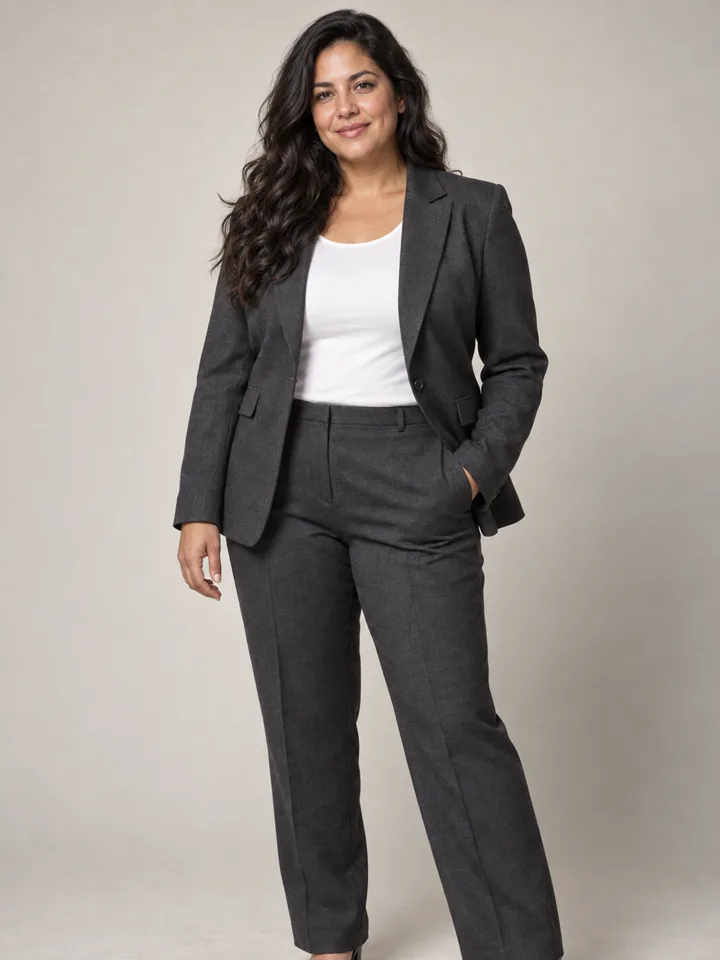
- Relaxed tailoring — Inspect shoulder width, lapels, cuffs and waist; this is a styling idea, not a garment fit prediction.
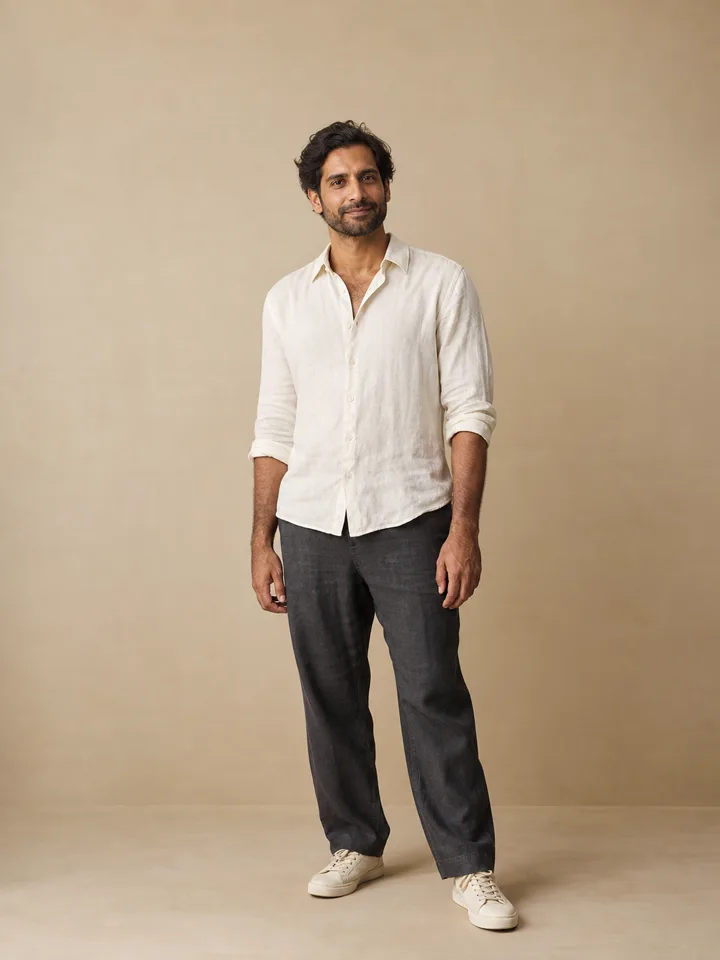
- Weekend linen shirt — Check collar shape, believable folds and arm boundaries without changing body shape.
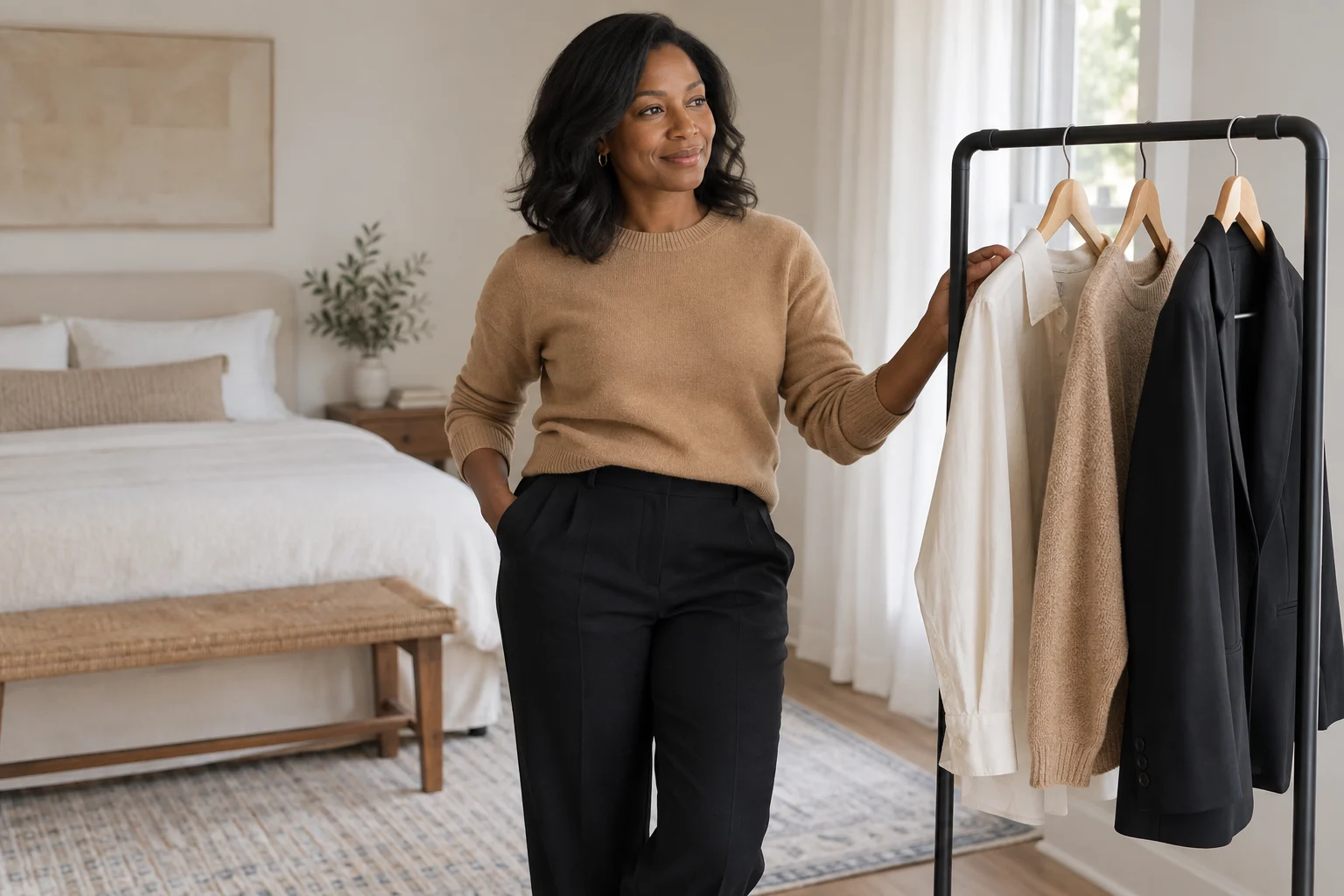
- Everyday knit — Inspect the neckline, shoulder width and where sleeves meet the hands.