Use a mood, not an inventory
You do not need a wardrobe catalog to explore how a different outfit could look in a photograph. Start with a clear torso or full-body image, then describe the silhouette and mood you want to compare. This is visual outfit exploration. It does not identify products you own, recommend a clothing size or verify whether an item is available to buy.
A useful first question is “Do I prefer a structured outline or a relaxed one?” That question is easier to answer than “What is my perfect style?” Limit the first comparison to two or three alternatives, keeping the pose and background the same.
Three briefs with different jobs
| Direction | Garment idea | Visual question |
|---|---|---|
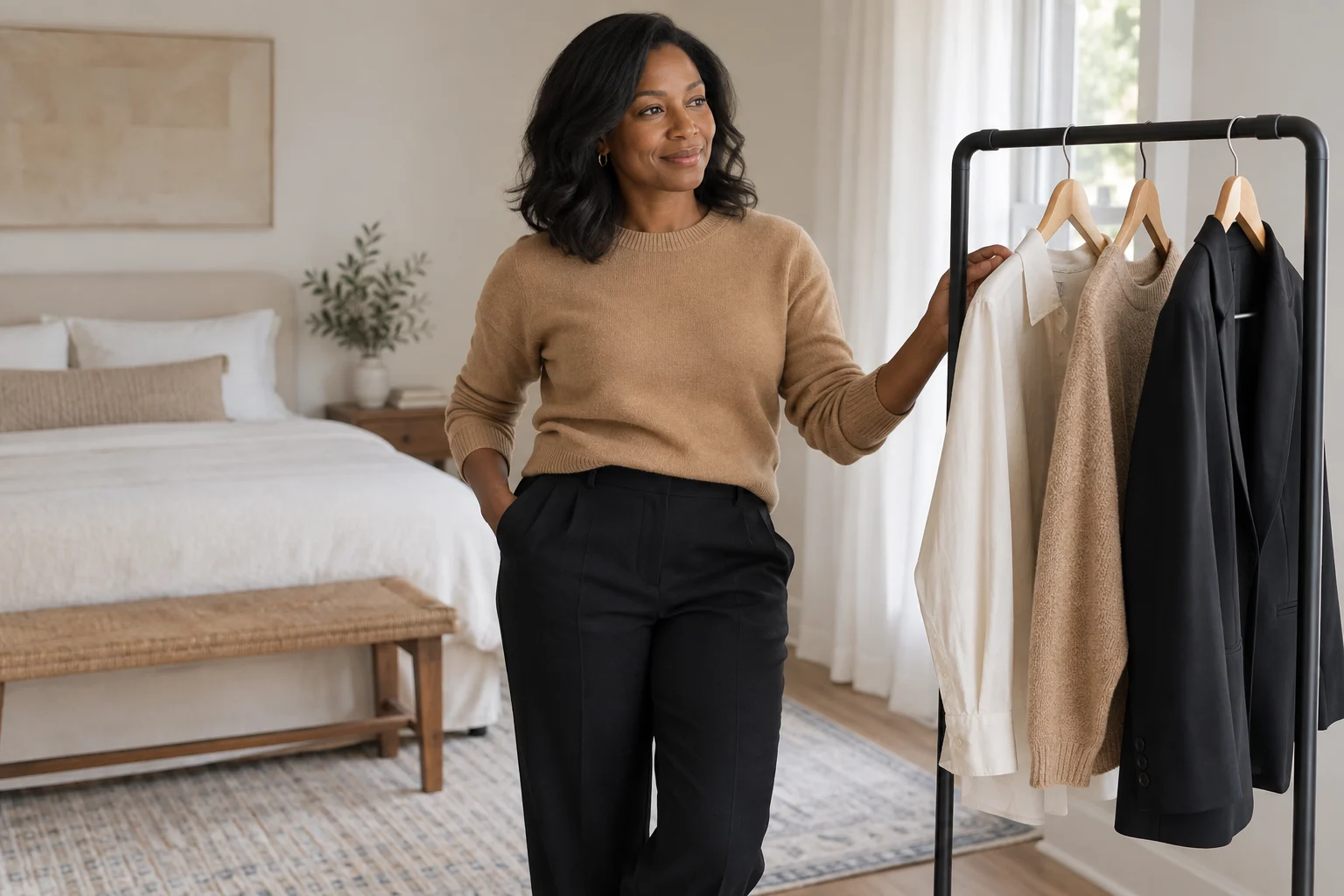
| Everyday knit | Plain knit with a simple neckline | Does a softer texture suit the mood of the photo? |
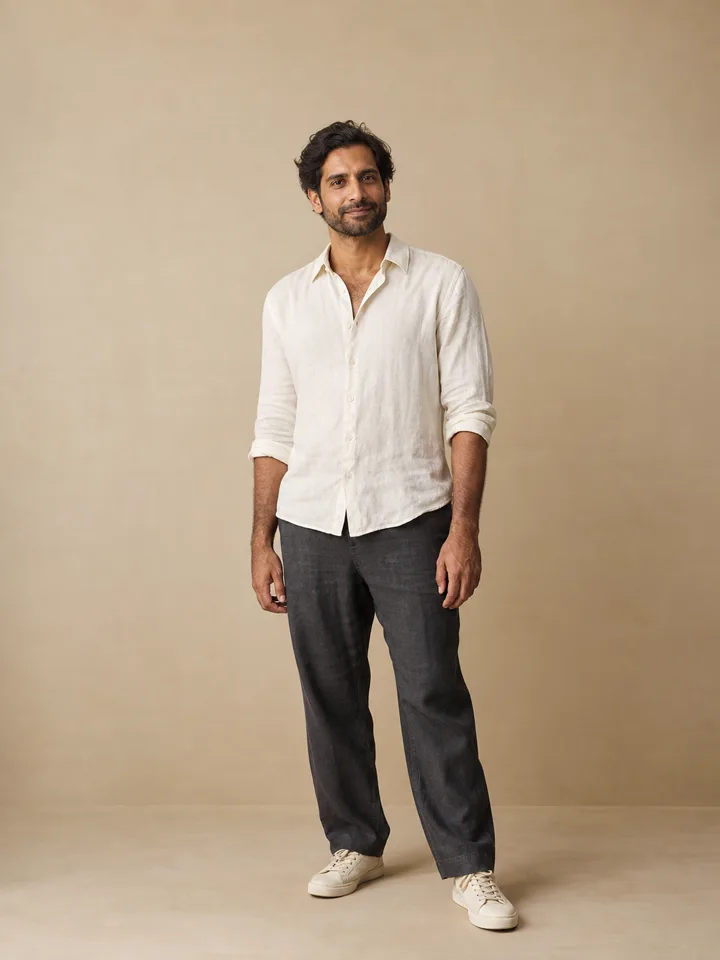
| Weekend linen | Light shirt and relaxed trousers | Do I prefer a looser, lighter outline? |
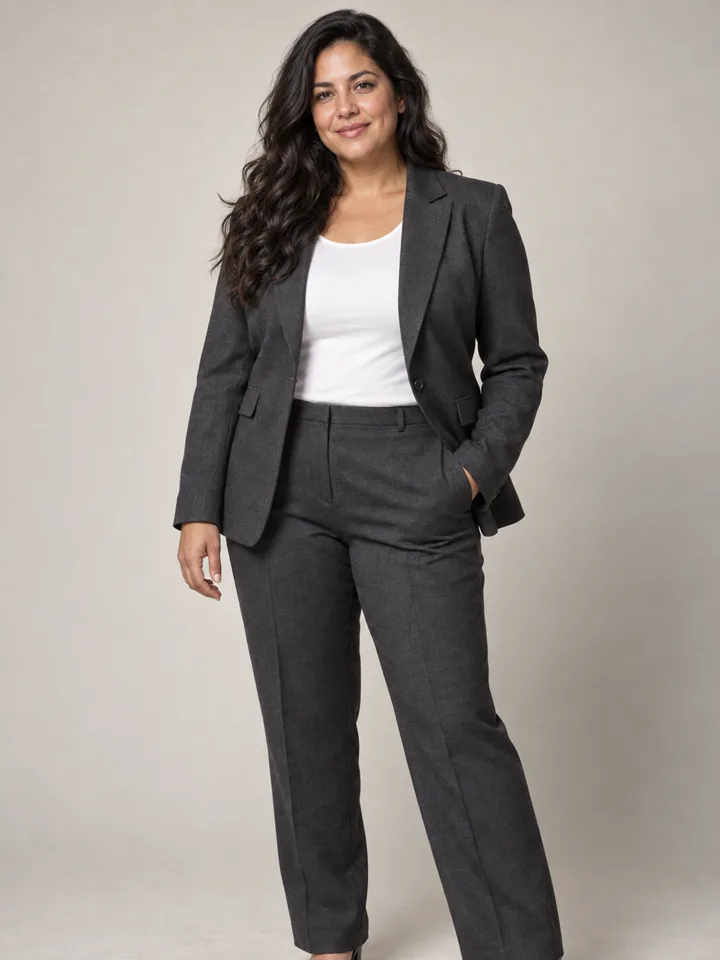
| City tailoring | Structured jacket and straight trousers | Does a more defined shoulder feel right? |
These are not a capsule wardrobe shopping list. They are three contrasting briefs for an image. Explore everyday knit, weekend linen and city tailoring to compare the intended details.
Choose a photo that exposes the decision
For neckline or jacket ideas, a clear waist-up image may be enough. To compare trouser shape, include the hips, legs and shoes. Keep arms from crossing over the main garment. Bags, folded jackets and large scarves can conceal the region you want to change.
Do not ask a cropped headshot to establish how a full outfit would fall on your body. Any unseen area must be invented. If the comparison depends on that area, take another input photo instead of accepting an attractive guess.
Keep body and garment separate in the brief
Replace the visible outfit with a relaxed cream linen shirt and sand-colored straight trousers. Preserve the person's body proportions, face, pose, hands and background. Show natural fabric folds. Do not add logos, bags or jewelry.
Start with one outfit change. Avoid wording such as “make me slimmer” when your real question is the cut of a jacket. Otherwise, the resulting body change can make the outfit appear more successful than it is. Check whether the waist, shoulders or height changed before judging the clothes.
Review fabric and boundaries
Inspect where the collar meets the neck, where sleeves meet wrists and where a waistband meets the torso. Small errors are easy to overlook in a thumbnail. For layers, trace each garment edge: a lapel should connect to the jacket, and a shirt should not merge into the skin.
Compare the output with the original at the same size. Label each saved image with what you liked: “open neckline,” “lighter texture” or “more defined shoulder.” These observations remain useful even if you never purchase an exact matching outfit.
Turn the shortlist into an idea you can use
Choose a direction first, then explore a second variation in color or neckline. An image cannot tell you how cloth feels, whether a size fits or how it moves. If you later shop, treat the image as a visual brief and assess real garments separately. Read outfit preview versus virtual try-on to understand that boundary, or one outfit, a different mood for a smaller experiment.