Before you start
A hairstyle preview can help you compare an outline around your face. It cannot establish how a cowlick will behave after a cut, drying, or an ordinary day. Keep the attractive preview beside photographs of your actual hair, and use the difference to frame questions for a stylist.
Hair.com's stylist interview explains that cowlick location affects haircut choices and that no single haircut works best for everyone. It is a commercial hair-care editorial, not an individual assessment. Use it as context for discussing your real hair rather than a promise of a particular result. Hair.com's cowlick guide
Record your actual dry-hair baseline
Photograph your hair when dry, before deliberately arranging it to match the desired reference. Record how it was dried and whether products, clips, or brushing shaped it. “Unstyled” is useful only when you describe what happened before the photo.
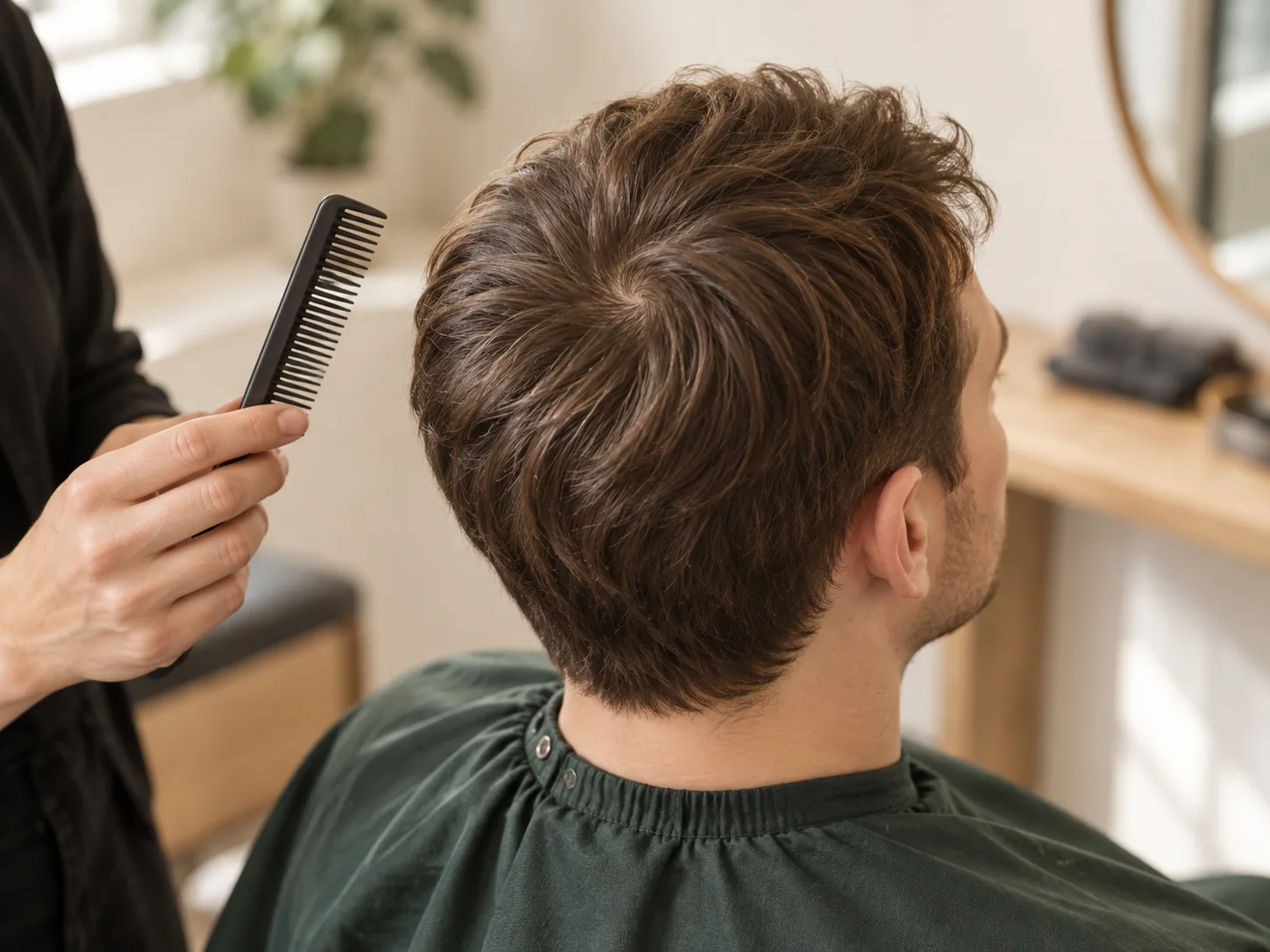
Take a front view, both sides, and a view of the crown or back if that is where the concern sits. Use consistent light and avoid a beauty filter. Ask someone to help with a crown photograph if you cannot frame it clearly. Keep the original views even if only one will be used for a preview.
Describe what you can observe: a section lifts at the front, a fringe separates near one side, or hair appears to turn around a point at the crown. Note left and right from your own perspective, since mirrored selfies can confuse the discussion. Do not turn a single photograph into a diagnosis of the cause or a prediction of future growth.
If your usual routine changes the appearance, take another set after that routine and label it separately. That gives the stylist a baseline and a styled comparison instead of two unexplained images.
Separate cut, part, and styling assumptions
An appealing preview may combine several changes: a shorter fringe, a different part, flatter roots, and a smoother finish. You may like the final outline without knowing which of those changes your hair can maintain.
Write each assumption down. The hair texture and maintenance guide can help organize the broader decision. Keep the cowlick-specific question narrow: what does the proposed shape require this particular area to do?
For example, a straight fringe preview may show hair falling across a place that separates in your dry-hair reference. That does not prove the fringe is impossible, but it means the image has not answered the practical question. Ask the stylist to examine the actual area before choosing a length or cutting strategy.
Similarly, use a middle-versus-side-part comparison to compare appearance, not to prove that your roots will stay in the pictured direction.
Compare a limited set of previews
Use your own adult photo with the same angle, crop, and lighting for each candidate. Request one main change at a time. Preserve face shape, hairline, and other recognizable features so a prettier face edit does not distract from the hair decision.
Two or three clearly labeled candidates are easier to discuss than many subtly different images. Add a note below each: “outline reference only; growth pattern not demonstrated.” Reject a candidate that erases the relevant hairline area or hides the crown when that is the part you need to discuss.
Here is a hypothetical planning comparison, not a tested haircut or styling result:
| Candidate | What looks useful | Unproven assumption | Question for the stylist |
|---|---|---|---|
| Fringe across the forehead | Preferred framing around the eyes | Front section stays together | How would my observed separation affect this shape? |
| Side-swept front | More forehead remains visible | Hair settles in the new direction | Can you demonstrate the proposed direction on my actual hair? |
| Current front with a different crown outline | Familiar face framing | Crown can lie as smoothly as shown | Which part of this outline depends on styling rather than the cut? |
You do not need to choose the smoothest candidate. Choose the one whose assumptions you can explain and have assessed.
Bring a consultation card
Use the guide to showing a hairstylist what you want to turn the images into a focused conversation. Include these fields:
- Location: Front hairline, crown, nape, or another observed area.
- Observed behavior: Where hair lifts, separates, or changes direction in real photos.
- Current routine: Drying method, products, and tools you actually use.
- Preferred outline: The exact part of the preview you like.
- Effort limit: What you are willing to do regularly, stated as your preference.
- Questions: What needs an in-person check or a styling demonstration?
Ask what the shape might look like without the suggested routine, which areas should be assessed before shortening, and how the plan could change as the cut grows out. Request a demonstration where practical rather than a guarantee that the preview will happen.
Your available morning time is an input to the decision, not an estimate the image can supply. Likewise, a general article cannot prescribe one length that will control every person's cowlick.
Save the decision and its limits
After the consultation, keep the baseline photographs, preferred preview, and agreed plan together. Record which assumptions were confirmed through looking at the real hair, which remain uncertain, and what routine was discussed. This makes a later appointment easier to review without treating the generated image as the haircut specification.
LookScene's hair previews are comparison aids. They do not measure growth direction, predict daily styling time, or permanently change a cowlick. Keep a candidate only if it preserves your recognizable features and helps explain a realistic question. The final haircut decision should connect the desired outline with your actual hair and the routine you are willing to maintain.
Style options to compare
Use these illustrated directions to plan what to try. They are not verified before-and-after results; inspect the review checklist on each page.
- Buzz cut — Check the original hairline, ears and scalp; do not interpret a preview as hair-density advice.
- Low fade — Check that both temples taper naturally and that the ears retain their shape.
- Classic side part — Check the part direction, forehead exposure and believable root volume.